Education Against Poverty: How Your Support Creates Opportunities
Discover why education is the most important key to a better future for orphaned children and how sponsorship can help overcome poverty.
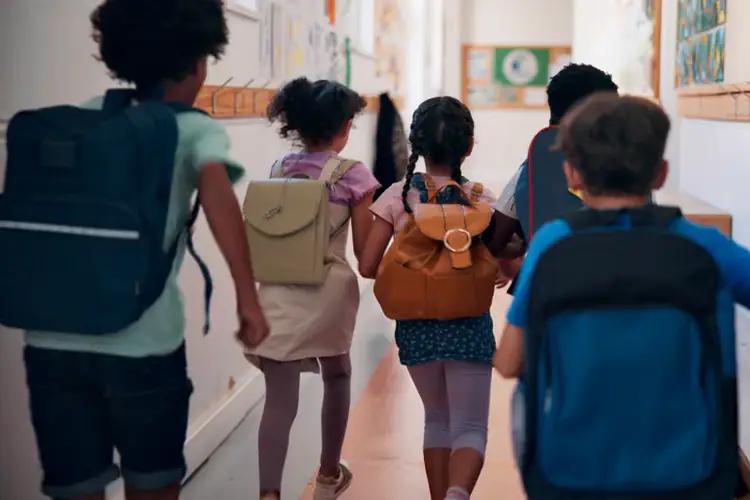
Relieving hunger is vital for survival, but education is the tool children use to build their own future. Many people wonder: “Will my support really make a lasting difference?” In this article, we show you how our local schools work and why a place at school is the most effective way to break the cycle of poverty across generations – not through empty promises, but through measurable results.
Contents:
- The vicious cycle: Why poverty is often passed down
- Our schools: Safe spaces and places of learning
- More than maths: Supporting the whole child
- Economic impact: Education strengthens local communities
- Conclusion
- FAQs
The vicious cycle: Why poverty is often passed down
In many crisis-affected regions, poverty means having few opportunities above all else. Without access to education, children are forced to contribute to their family's income from an early age – often through strenuous physical labour.
- No qualifications: Without schooling, skilled jobs remain out of reach.
- Lack of knowledge: Basic information about hygiene and rights remains unknown.
- Generational trap: The next generation begins life under the same conditions.
Education breaks this cycle. Those who can read, write and do arithmetic have a choice about the path their lives take.
Instead of only easing the symptoms of poverty in the short term, a sustainable education sponsorship enables you to address the root cause and give a child the tools for an independent life.
Our schools: Safe spaces and places of learning
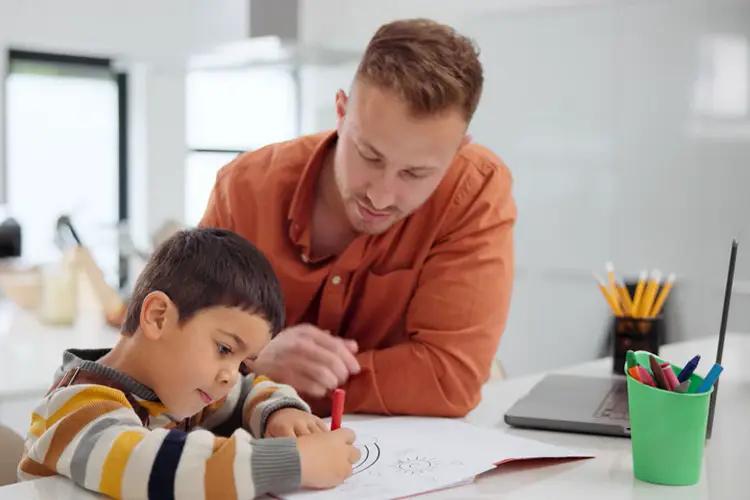
Our educational facilities are more than just buildings. For many orphaned children, they are the only place where they can simply be children.
- Qualified teachers: We employ local staff who understand the children's language and culture.
- Learning materials: Every child receives notebooks, pens and books – resources that are often unaffordable at home.
- A safe environment: School protects children from exploitation and brings stability and structure to their daily lives.
Studies by organisations such as UNESCO show that every additional year of schooling significantly increases future income around the world.
More than maths: Supporting the whole child
Education at World of Peace is about more than classroom teaching. We support every aspect of a child's development to prepare them for an independent life:
- Values: Respect, community and ethical conduct are at the heart of our work.
- Preventive healthcare: Regular health checks take place at our schools.
- Nutrition: Children can only concentrate on learning when they are well fed – we ensure they receive daily meals.
Rely on our many years of local expertise and give a child a place at school in just a few clicks, providing genuine opportunities for the future through qualified teachers and holistic care.
Economic impact: Strengthening the local community
Education has a multiplier effect. Later in life, an educated child supports their family and often invests in the local economy. This creates small centres of progress that can become independent of external assistance over time. This is the essence of helping people to help themselves.
Education is not a privilege, but a human right
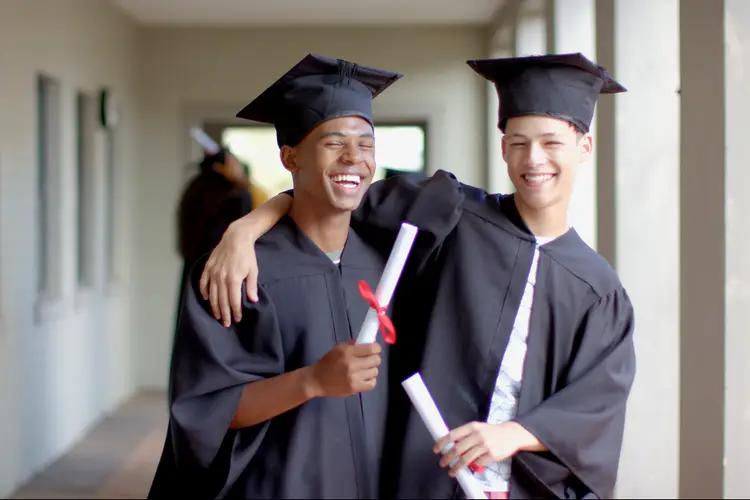
At World of Peace, we see education as more than simply teaching: it is the most powerful tool for escaping poverty. For years, we have been committed to building infrastructure in crisis-affected areas that reaches far beyond the classroom. Our team includes experts in development cooperation and local educators who understand exactly which barriers children in these regions must overcome.
Why is our approach so effective? Because we take a holistic view of education. Experience has shown us that children cannot learn when they are hungry or feel unsafe. That is why we combine schooling with daily meals and basic healthcare. This in-depth expertise enables us to manage projects that deliver a measurable “return on education” – graduates who go on to become drivers of economic progress in their own communities.
We select our project locations according to strict criteria to ensure your support reaches places where the potential is greatest but assistance is most limited. We are proud that our standards of transparency give you confidence that every contribution directly supports the education and skills of the next generation. When you sponsor a child through us, you are not investing in an anonymous system, but in an individual child and their lifelong opportunity for independence.
Together, let us lay the foundations for a world without poverty. Take action now and support an orphaned child's education to break the cycle of limited opportunity once and for all.
Conclusion:
Real change takes time and patience. When you sponsor a child's education, you give them not only knowledge, but also the freedom to support themselves. It is the surest way to tackle poverty at its source. With every child who completes school, hope grows for a stable and peaceful society where children can develop into confident, independent adults.
FAQs
How do we ensure that educational content is culturally sensitive and locally relevant?
It is reasonable to ask whether Western-style education systems can simply be transferred to crisis-affected regions without adaptation. At World of Peace, we take a different approach: our curricula are based on each country's official standards and enriched by local experts who have an in-depth understanding of the community's cultural and religious values. We take great care to ensure that education strengthens children's identities rather than alienating them. This also means teaching languages that offer genuine local employment opportunities and practical skills that are truly needed in the regional economy. In this way, the school does not become something imposed from outside, but an integral part of local development.
What happens to the children when they finish school?
Our support does not end with the final bell at primary or secondary school. We prepare young people for the transition into adulthood by helping talented students attend further vocational training centres or universities. The goal is complete economic independence. We often see former orphaned pupils who attended our schools return to their communities as teachers, skilled tradespeople or healthcare professionals. This “reverse impact” ensures that the knowledge invested remains within the region and acts as a catalyst for the prosperity of the whole community.
How do we support traumatised children for whom ordinary learning may seem impossible?
Many orphaned children in our project areas have experienced displacement, loss or violence. Children with post-traumatic stress disorder struggle to process information because their brains remain in survival mode. Our educational approach is therefore inseparably linked to psychosocial support. Our teachers receive specialist training to recognise signs of trauma and create a “safe space” where healing can begin. We incorporate play, art and sport into the school day to reduce children's stress levels. Only once they feel emotionally secure can the process of learning truly succeed.
You may also be interested in:
Tackle poverty at its roots and invest in sustainable local education.