
Donate to Gaza & Sudan: Does the Aid Really Get Through?
Blocked borders? Learn how World of Peace safely delivers your emergency donation to Gaza and Sudan.
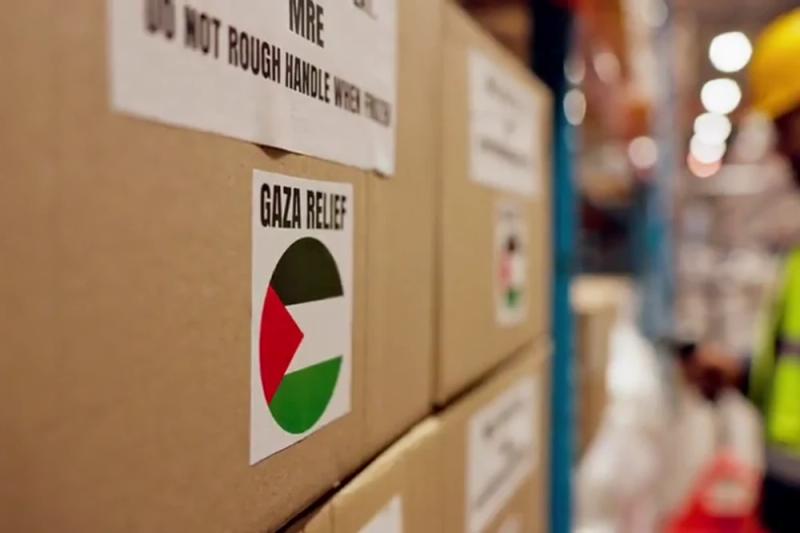
When you see the images from Gaza or Sudan, you want to help. It is a natural response rooted in compassion and a shared sense of responsibility. At the same time, doubts immediately arise: the news reports blocked border crossings, miles-long queues of lorries and bureaucratic obstacles. You rightly wonder whether your donation will actually reach people on the ground or be lost somewhere along the way. This article clears up these uncertainties. You will learn in detail how professional emergency aid works under extreme conditions, which logistical routes are used and how your support reaches the places where the need is greatest.
Contents:
- The reality at the borders: Why conventional transport routes fail
- The local network: The key to successful distribution
- Logistics in detail: How food and medicine reach Gaza
- Delivering aid in Sudan: Routes through a country torn apart
- Local procurement: Why we do not send parcels from Germany
- Transparency and oversight: How misuse is prevented
- Why every second counts: The current situation at a glance
- Urgent crisis: Why every hour counts
- Conclusion
- FAQs
The reality at the borders: Why conventional transport routes fail
Anyone trying to transport relief supplies from A to B like a conventional logistics company will quickly encounter barriers in crisis areas such as Gaza or Sudan. The borders are no longer ordinary customs checkpoints. They are political and military bottlenecks.
In Gaza, daily operations are shaped by security checks lasting several days, scans and political approval processes. A lorry may wait for weeks at a crossing such as Kerem Shalom or Rafah before receiving permission to enter. In Sudan, vast distances, destroyed infrastructure and constantly shifting checkpoints controlled by the parties to the conflict make access more difficult.
Conventional organisations without established local structures and agreements struggle to overcome this bureaucracy. Effective emergency aid requires detailed knowledge of approval processes, the flexibility to respond to border closures and the use of alternative routes as soon as one becomes blocked.
Continuous outside support is essential to maintain round-the-clock medical care and the distribution of staple foods in crisis areas – here you can donate to emergency aid and help save lives directly on the ground.
The local network: The key to successful distribution
Transporting aid to the border is only half the task. The real bottleneck is distributing it within the crisis area. Once a lorry crosses the border, its cargo cannot simply be unloaded without oversight. This is where local networks become essential.
A successful aid organisation works with permanent or long-standing local aid workers, logistics specialists and partner organisations. These people understand the situation on the ground:
- They know which roads are passable and safe.
- They know the locations of temporary camps and emergency shelters.
- They are in direct contact with community leaders to identify specific needs.
Without these local teams, every aid delivery would be operating blindly. They ensure that supplies are sorted and packed as soon as they arrive, then handed to the families who need them most urgently.
Logistics in detail: How food and medicine reach Gaza
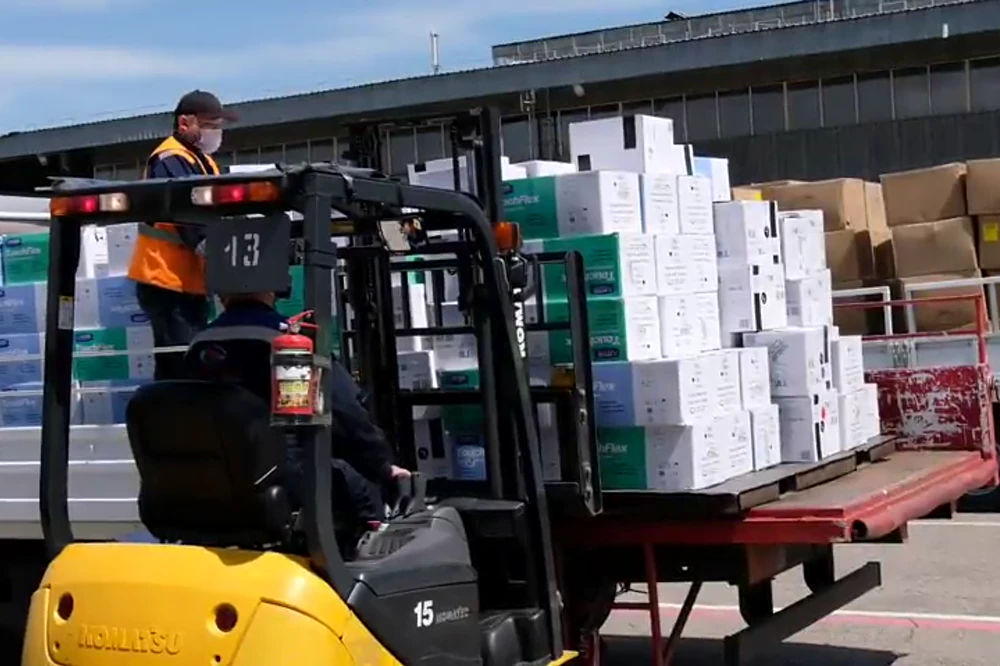
Supplying Gaza requires an extremely precise approach. Because the import of goods is tightly regulated, aid is organised in strategic stages:
| Step | Action | Objective |
|---|---|---|
| 1. Procurement | Purchasing flour, rice, cooking oil and medical supplies in neighbouring countries (e.g. Egypt or Jordan). | Cost efficiency and short transport routes to the border. |
| 2. Palletisation | Packing supplies according to the border authorities' strict requirements to speed up clearance. | Minimising waiting times during scans. |
| 3. Handover | Transport by authorised drivers to checkpoints, followed by transfer to local vehicles. | Complying with security requirements while keeping the cargo safe. |
| 4. Distribution | Transport to remaining warehouses in the Gaza Strip and direct distribution to families. | Rapid delivery without lengthy storage periods. |
This structured process ensures that perishable food and urgently needed medicines remain usable despite the inspections.
Global studies also show that this regional approach is the only effective way forward: major organisations have long called for greater localisation of humanitarian aid (Welthungerhilfe), as local procurement has been proven to reduce CO₂ emissions, greatly improve the efficiency of funding and reach crisis regions more quickly.
Delivering aid in Sudan: Routes through a country torn apart
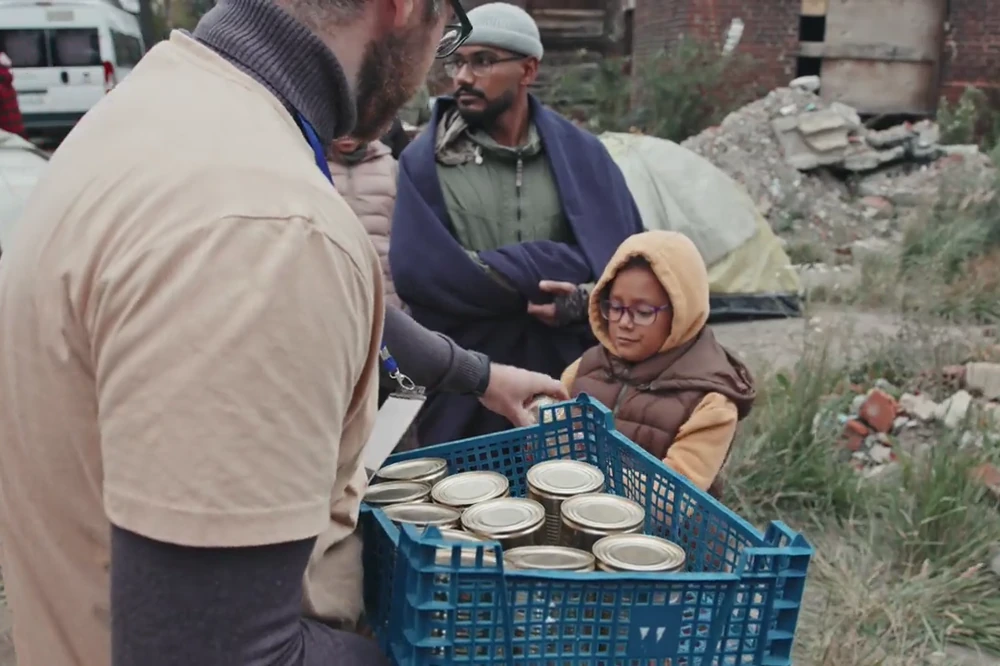
In Sudan, the challenge is less about a single heavily guarded border and more about the enormous distances and security situation within the country. The port of Port Sudan often serves as the main entry point for international relief supplies. From there, deliveries must be transported thousands of kilometres across the country.
A decentralised approach is used to support Sudan effectively. Rather than sending everything along one route, some supplies enter through neighbouring countries such as Chad or South Sudan to bypass conflict lines. Local hubs (distribution centres) play a vital role. As soon as a region becomes safely accessible, stock at these centres is replenished immediately to support nearby villages and refugee camps.
Local procurement: Why we do not send parcels from Germany
Effective emergency aid is fundamentally different from private aid shipments. A common misconception is that relief supplies are collected and packed in Germany, then transported with great difficulty to Gaza or Sudan. This approach would not only be extremely expensive, but also logistically inefficient and far too slow.
The key to our success is local and regional procurement (in-country sourcing). World of Peace strategically purchases the required food, blankets and medical products in neighbouring countries or – whenever the security situation allows – from wholesalers within the crisis area itself. This provides three crucial benefits that make your donation go further:
- Immediate availability: Supplies do not need to be transported across continents; they are already available at key logistics hubs and border crossings.
- Cost effectiveness: Local procurement eliminates enormous international transport costs. This means that almost every euro you donate can go towards the actual relief supplies rather than fuel or air freight.
- Cultural and religious suitability: Food supplies closely reflect local eating habits and standards (such as locally baked flatbread and familiar staples). This also strengthens the regional economy in safer areas.
Transparency and oversight: How misuse is prevented
Your donation is a trust (Amanah). Complete documentation is therefore essential. Professional emergency aid leaves nothing to chance or good faith. Every stage of transport is monitored:
- Purchase receipts: Every tonne of flour and every box of medicine is recorded with clear invoices.
- Photographic documentation: The arrival of goods, loading of lorries and distribution to people are documented with photos and videos.
- Recipient lists: Distribution is carefully organised. Local aid workers record which families have received support to ensure fair distribution and avoid duplication.
These measures protect the project from corruption and misuse of funds. They give you confidence that your support is used for exactly the purpose for which you gave it.
Every day without clean water and food deepens the crisis in Sudan and Gaza. Fast administrative processes and reliable partners are therefore crucial to ensuring that your Gaza aid and Sudan donation reach affected families directly.
Why every second counts: The current situation at a glance
The situation in the affected areas cannot wait. Infrastructure in Gaza has almost completely collapsed. Clean drinking water is scarce, increasing the spread of disease. Families are living in tents or ruins and depend entirely on external food assistance.
In Sudan, the conflict has displaced millions of people. Many have lost everything and are sheltering in the open. Without regular deliveries of staple foods, there is a risk of famine on an unimaginable scale. In these situations, emergency aid is not a long-term development project but immediate, life-saving assistance. Every hot meal, every container of clean water and every medical kit saves lives right now.
Urgent crisis: Why every hour counts
Emergency aid is a race against time. While long-term development projects may involve months of planning, in Gaza and Sudan the availability of relief supplies within 24 hours can mean the difference between life and death. A blocked transport route is not merely a delay; it means families must endure another night without clean drinking water or food.
During times of heightened spiritual and shared responsibility – such as the holy month of Ramadan or sudden escalations – the Muslim community pays even closer attention to those suffering. The willingness to help is immense, but the logistics must be able to keep pace.
Professional systems make it possible to process funds digitally within minutes and transfer them directly to procurement depots in secure border areas. This means that if you decide in the evening to support people in need, your contribution may be loaded onto a lorry as fresh flour or medical dressings by the next morning. This immediacy helps overcome the helplessness many feel when seeing news reports and turns compassion into measurable, rapid action.
Every donation is a trust: How we help people survive
Behind every cent and every donation is the trust that aid will reach those whose very survival depends on it. As an experienced and reputable aid organisation, World of Peace e.V. does not leave people alone in some of the most severe crisis areas of our time. While international bureaucracy often grinds to a halt, our logistics teams and local aid workers tirelessly work to overcome blocked borders and turn your emergency donation directly into life-saving assistance.
By giving specifically to Gaza aid or making an urgent donation for Sudan, you are not funding theoretical concepts but immediate, tangible relief from acute hardship. Every contribution goes directly towards purchasing and distributing tanks of clean water, emergency medical kits and nutritious food parcels for families who have lost everything. We uphold our religious and moral responsibility for your trust (Amanah) with complete transparency and comprehensive photographic documentation. Together, let us preserve human dignity where infrastructure has collapsed and send a powerful message of solidarity.
If you would like to save lives now and ensure that your support arrives directly, you can donate to emergency aid here and make direct assistance possible.
Conclusion:
Providing aid in areas facing extreme crises is complicated, but it is by no means impossible. Blocked borders and bureaucratic obstacles are real challenges, yet they can be overcome through years of experience, established supply chains and a strong local network. When experienced specialists coordinate distribution, your support reaches the places where the need is greatest. Reliable structures and complete transparency make the difference between good intentions and genuine, life-saving impact.
FAQs:
How does World of Peace ensure that lorries can enter Gaza?
We use officially approved logistics routes and work closely with experienced partners who have the necessary permits from border authorities. Relief supplies are packed precisely according to requirements to minimise the time taken by administrative processes at border crossings.
Will my donation still get through if a border is completely closed?
Yes. If a particular border crossing is temporarily closed, our contingency plans take effect. We switch to alternative routes through neighbouring countries or use existing stock that our teams have already positioned in the regions to maintain uninterrupted support.
Who distributes the relief supplies to people on the ground?
Distribution is handled by our trusted local aid workers and partner organisations in Gaza and Sudan. They live in the area, know the safest routes and distribute supplies directly to families in need at emergency shelters and refugee camps.
Can I see what happens to my donation?
Yes, transparency is important to us. We regularly document the arrival and local distribution of relief supplies through photos and videos. We publish these updates on our website and in our project reports so that you can follow the journey of your support.
What is most urgently needed as part of the emergency response?
The top priorities currently are clean drinking water, non-perishable staple foods such as flour, rice and cooking oil, emergency medical equipment, warm blankets and emergency shelters. We adapt our procurement flexibly to the latest needs on the ground.
Does 100% of my donation go to the chosen project?
Your donation is restricted to emergency aid in the relevant region. We budget very carefully and keep administrative costs as low as possible so that the maximum amount goes directly towards purchasing and transporting life-saving relief supplies.
You may also find this relevant:
Every second can mean the difference between life and death – understand the urgent need to help and support people on the ground with your donation.