
Donate to build a well: How clean water saves lives
Help build wells through sustainable giving. Discover how clean drinking water lifts entire villages out of poverty and empowers communities to help themselves.
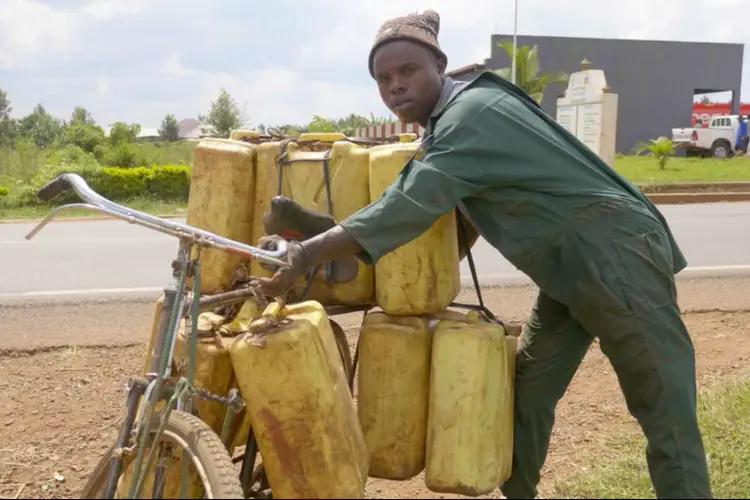
For us, clean water is just a turn of the tap away. Yet for millions of people, accessing it is a daily struggle. Global health data also shows that clean water cannot be taken for granted. According to the World Health Organization (WHO), more than two billion people worldwide lack safe access to clean drinking water where they live. When you donate towards a well, you actively help change this statistic.
Contents:
-
- The vicious cycle: Why unsafe water entrenches poverty
- The transformation: What happens when a village gains access to clean water?
- Education for girls: How a well shortens the journey to school
- Health as a foundation: Putting an end to preventable diseases
- Focus on sustainability: Why many wells run dry and how to prevent it
- Laboratory testing in remote areas: Why depth does not guarantee quality
- Local logistics: From geological surveys to the first drop
- Conclusion
- FAQs
The vicious cycle: Why unsafe water entrenches poverty
Poverty takes many forms, but nearly all can be traced back to a lack of resources. When a village has no access to a clean water source, the entire community is held back. The day begins not with work or school, but with the essential search for water.
Women and children bear most of the burden. They often spend three to six hours a day carrying heavy containers along unsafe routes that stretch for miles. This leaves no time for other priorities: mothers cannot establish small businesses to support their families, and children miss school.
Then there is the quality of the water. Water collected from open ponds or rivers is usually contaminated with bacteria, parasites and animal faeces. This leads to severe diarrhoeal diseases, which are particularly life-threatening for young children. Families become trapped in a cycle of illness, lack of time and lost opportunities.
Even a small contribution can improve the quality of life of an entire community. You can support construction and donate towards a well with World of Peace, giving people lasting access to clean drinking water.
The transformation: What happens when a village gains access to clean water?
As soon as a working well opens in the centre of a village, the whole community changes almost overnight. It is like restarting an engine that had stalled. Clean water becomes the catalyst for far-reaching social and economic transformation.
|
Area of life |
Without a well |
With a local well |
|
Time |
Hours of exhausting walking |
Water available within minutes, directly in the village |
|
Health |
Frequent, severe infections & typhoid |
Waterborne diseases almost completely eliminated |
|
Education |
High rates of school absence, especially among girls |
Regular school attendance and better prospects |
|
Agriculture |
Complete dependence on unpredictable rainfall |
Small-scale vegetable growing and livestock farming become possible |
A community once trapped in survival mode becomes a place of opportunity and progress. People regain the most valuable things they had been missing: time and health.
Education for girls: How a well shortens the journey to school
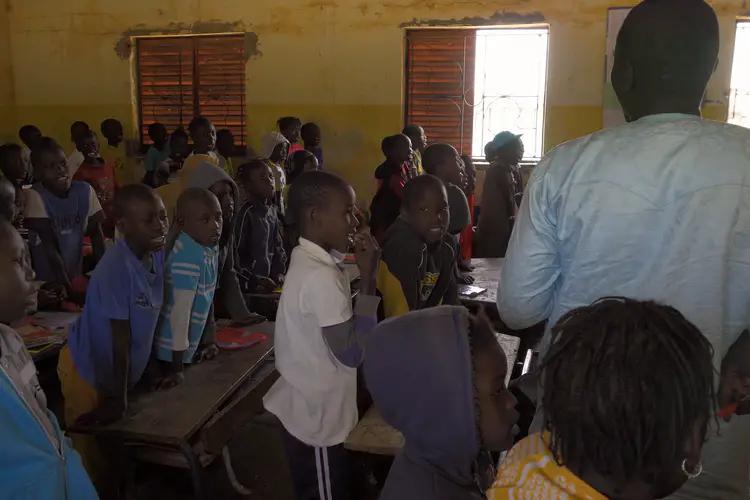
It is a sad reality that the burden of carrying water falls almost entirely on women and young girls. Removing the need to walk miles to fetch water has a direct, measurable impact on education rates in the region.
Girls who once spent their mornings walking to a water source instead of school can suddenly take their place in the classroom. Education is the most powerful tool for breaking the intergenerational cycle of poverty. Educated women marry later, have healthier children and reinvest more than 90 per cent of their future income directly in their families and villages. A well is therefore also a direct investment in equality and educational opportunity.
Health as a foundation: Putting an end to preventable diseases
Clean drinking water is the best medicine in the world. More than 80 per cent of all illnesses in developing countries can be traced directly to contaminated water and poor hygiene. Cholera, dysentery and severe typhoid outbreaks claim more lives each year than armed conflicts.
A sealed, properly drilled well protects water from surface contamination. Official reports from the World Health Organization show just how urgent this global threat is: unsafe water is one of the leading causes of serious infections worldwide. You can find the latest data and analysis on global drinking water supplies in the WHO drinking water report.
The logistics behind success: How aid reaches the last mile
Building a well is a logistical and technical achievement that requires careful planning. Simply digging a hole in the ground is not enough. Clear processes must be followed to safely reach the last mile in remote crisis-affected areas or drought regions:
-
- Preliminary geological surveys: Before work begins, experts use satellite data and on-site measurements to examine the ground and determine the precise depth of the groundwater source.
- Procuring heavy drilling equipment: Transporting drilling machinery into difficult-to-reach regions is an enormous challenge. Reputable organisations work closely with local logistics partners to avoid delays and obstacles.
- Real-time documentation: Every step is documented digitally, from the first day of drilling to the moment clean water first flows. This ensures that funds are used efficiently and progress can be tracked throughout.
Sustainable support that empowers communities starts at the source. Let us act now and work together to fund a vital well-building project through World of Peace.
Focus on sustainability: Why many wells run dry and how to prevent it
You may have read reports like this before: an organisation builds a well and leaves, but two years later the system no longer works because a seal has broken or the pump has jammed. That is not sustainable aid; it is a waste of donations.
For a well project to serve generations, the village community must be involved from the very beginning. Responsible well construction always includes establishing a local water committee. Selected villagers are trained as mechanics and learn how to carry out minor repairs themselves. Each family also makes a small, fair contribution towards a fund for replacement parts. The project is only truly successful when the village can maintain the system independently.
Laboratory testing in remote areas: Why depth does not guarantee quality
A common mistake in well construction is to focus solely on quantity: as long as water flows, the job is considered done. Yet deep groundwater is not automatically safe to drink. Depending on the region, the ground may contain naturally occurring but highly toxic substances such as arsenic, fluoride or extreme concentrations of salt, making the water undrinkable or harmful over time.
A responsible well project therefore never ends when groundwater is first reached. Only chemical and microbiological laboratory analysis can provide final assurance:
-
- Preliminary testing: Water samples are taken during the test drilling stage and transported to regional laboratories. They are tested for heavy metals, nitrate levels and pH.
- Tailored filtration systems: If water is plentiful but contains excessive levels of iron or salt, for example, special low-maintenance sand or activated-carbon filters must be integrated directly into the well system.
- Regular follow-up checks: Because aquifers may shift as the climate changes, water quality is retested at set intervals, including in the months after the well opens.
A well only deserves to be called life-saving if it is proven to provide chemically safe water. Before donating, check whether the organisation transparently documents these quality controls.
Track your donation in real time: See exactly where your support goes.
At World of Peace e.V., we do more than make promises. When you choose to support a well project, we take you on its digital journey. We replace outdated, opaque donation structures and give you full visibility through our own World of Peace App. You can see exactly when your contribution is received and follow the well's construction in the project region step by step.
Our well-building projects are grounded in rigorous sustainability and genuine transparency:
-
- Full ITZ transparency: As a signatory to the Initiative Transparente Zivilgesellschaft, we disclose all our financial information.
- Local responsibility: We build wells together with local people and train water committees so that the systems can last for decades.
- Direct visual evidence: Once construction is complete, you receive the precise GPS data as well as photos and videos of your well.
Give an entire village community the opportunity to lead a healthy, self-determined life. If you would like to support a sustainable and transparent aid project with World of Peace, join us in changing the world one sip at a time.
Conclusion:
A well changes everything because it provides a lasting answer to the most basic human need. True expertise in well construction is measured not by how quickly a hole is drilled, but by how sustainably and transparently the project is delivered. Water is the key to health, education and economic independence. Giving clean water does not provide temporary relief; it offers the lasting opportunity to live with dignity and free from poverty.
FAQs:
1. How much does it cost to build an entire well?
There is no single fixed price for building a well, as the cost depends greatly on local geological conditions. A durable community well generally costs between €2,500 and €8,000. Several factors affect the price: in regions with sandy soil, a simpler borehole may be enough, while rocky, drought-affected areas require heavy specialist machinery to drill hundreds of metres down to the aquifer. The cost also covers high-quality, rust-resistant materials, transporting machinery to hard-to-reach villages and training the village community afterwards. Every borehole is a major logistical undertaking.
2. How long does a professionally built well last?
A professionally planned and robustly built well can reliably provide a village community with clean water for 20 to 30 years, or even longer. Its lifespan depends greatly on the quality of the components used, such as stainless-steel pipes and durable pump heads, as well as the depth of the borehole. Shallow wells can quickly run dry during severe droughts. Responsible organisations therefore drill deeply enough to reach a reliable groundwater supply. The most important factor in longevity, however, is maintenance: when the well is serviced regularly and protected from external contamination, the water source can remain clean and operational for generations.
3. Will I receive precise proof of the well's location?
Yes. This is standard practice for transparent organisations. Once the well project has been completed successfully and the working pump has been handed over to the village community, you will receive a transparent project report as a supporter. Alongside detailed photos and videos of the construction and opening, this includes the well's precise GPS coordinates. You can easily enter this information into services such as Google Maps. From the satellite view, you can see the exact village and location where your support has changed local people's lives.
4. Who looks after the well if something breaks?
To prevent a well from falling out of use after a short time, a local water committee is established. During construction, selected women and men from the village receive thorough training from technicians. They learn how the pump mechanism works, how to replace worn parts and how to keep the system clean. Each family in the village also pays a small, fair contribution into a community fund. This is later used to purchase minor replacement parts, such as seals or screws, without outside assistance. It safeguards the village's independence because residents do not have to wait for external help with repairs.
5. Can I donate a smaller amount towards well construction?
Of course. You do not need to be a major donor to help fund a well. Every contribution is an essential building block towards the overall goal. Many smaller donations from different supporters are collected and pooled in a project account. Once the full cost of drilling has been raised, the machinery can get to work. In practical terms, every small donation helps buy a section of pipe or a valve, or funds another metre of drilling. For the people in the community, it makes no difference whether the well was funded by one person or a group of one hundred donors. The result is the same: clean drinking water.
6. Why are solar pumps often used in well construction?
Solar pumps are the most modern and sustainable solution for regions where groundwater lies extremely deep underground. Where hand pumps reach their physical limits, solar pumps use the abundant local sunlight to bring water to the surface automatically. The system offers major advantages: there are no ongoing costs for expensive and environmentally harmful diesel fuel, which villages often could not afford. During the day, water is pumped into large elevated tanks, allowing villagers to access it easily at any time and at good pressure from several taps. This prevents long queues at the pump.
You may also be interested in:
-
For children in need: Start a sustainable orphan sponsorship with World of Peace today.
-
For religious giving: Distribute your Zakat fairly through World of Peace.